Ashenford
Role / Responsibilities: Technical Artist, Feedback Systems, Designer
Team: Small Group (4)
Tools: Unreal Engine, Blender, Substance Painter, Substance Designer, Embergen, Liquigen, Google Documentation Suite
Development: 24 weeks
Game Overview
Ashenford is an action horror FPS game set in a small town that’s undergoing a zombie apocalypse.
Players must attempt to escape the town with the assistance of a trapped stranger in the towns radio tower.
Inspired by games like Silent Hill and Resident Evil, Ashenford builds an eerie small town vibe and utilize environmental storytelling to build a compelling town and narrative.
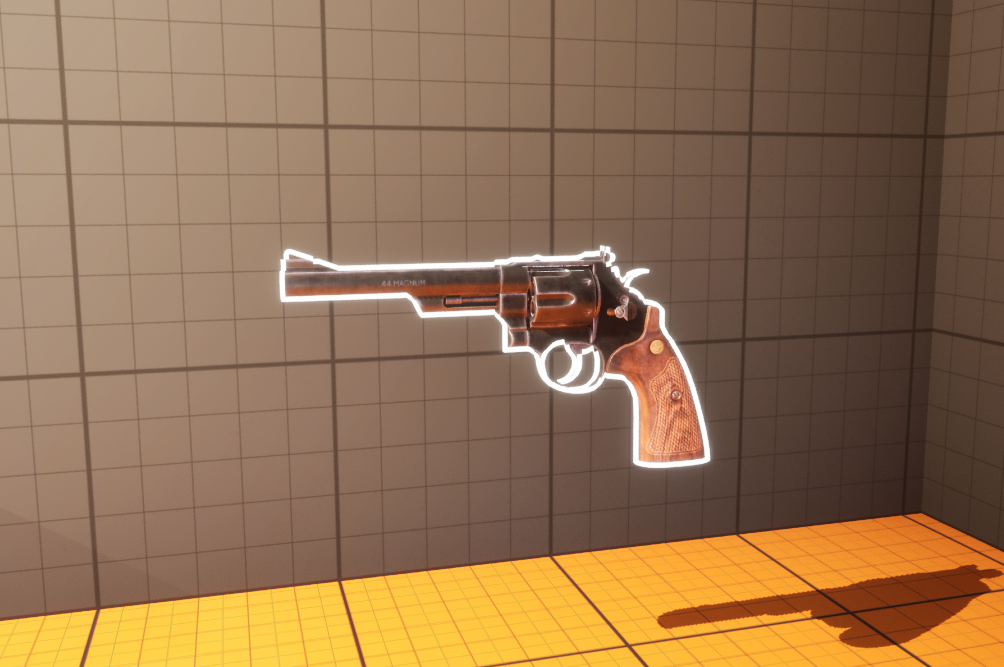
Intractable highlight shader
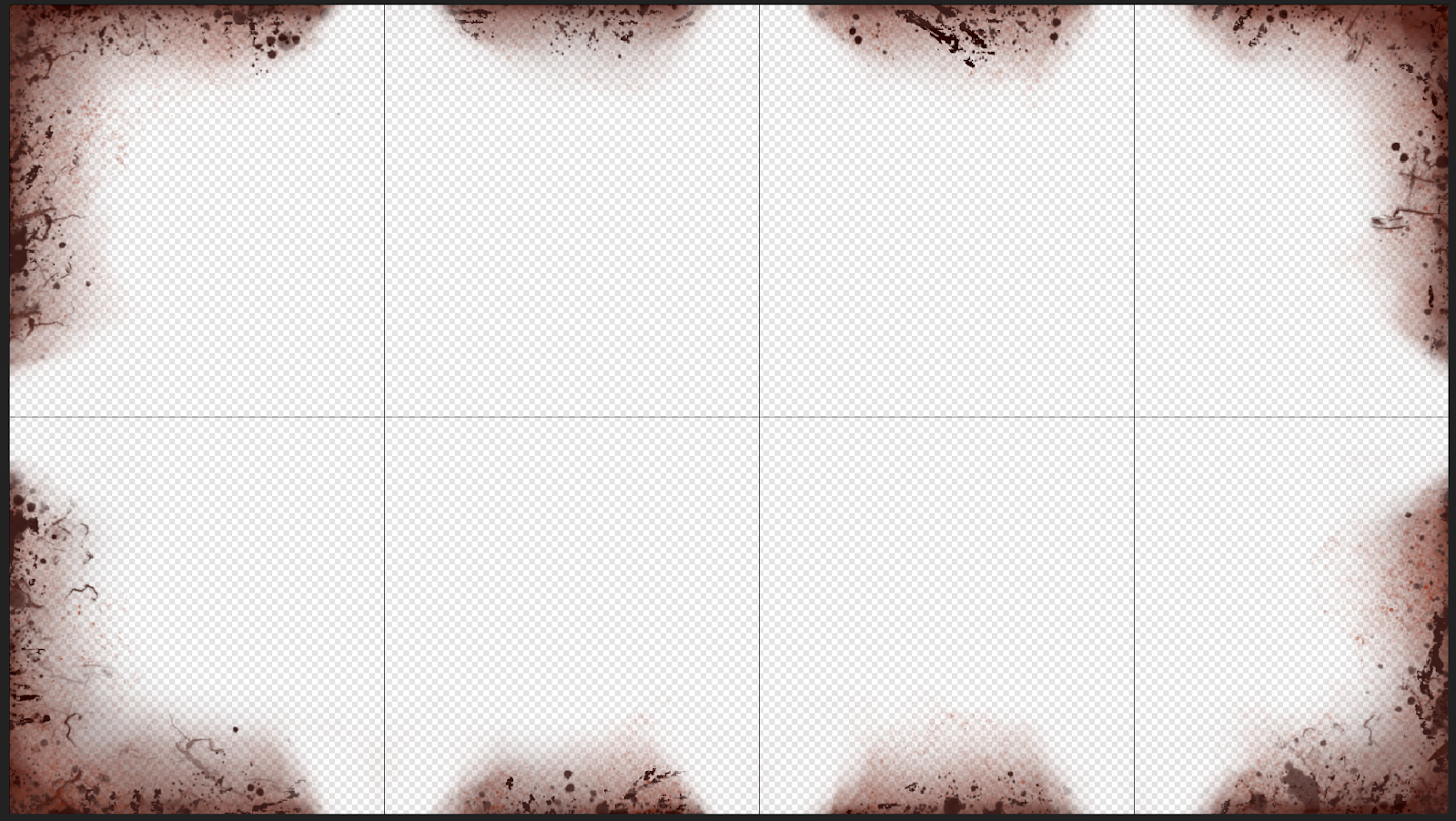
Directional damage UI texture
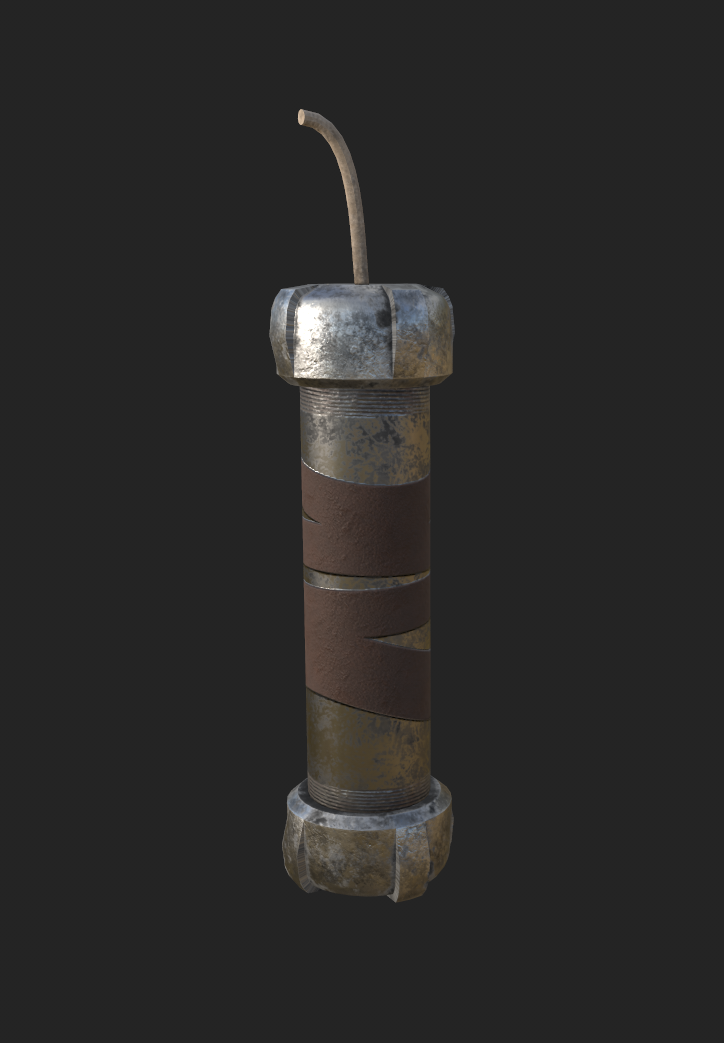
Grenade mesh
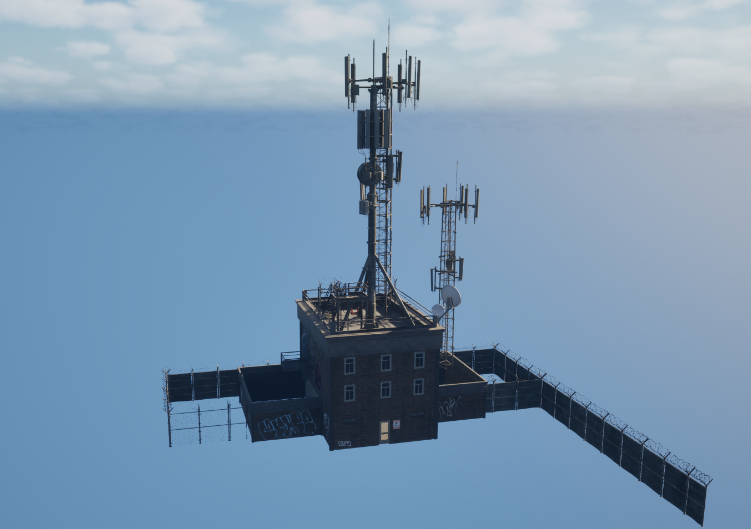
In-game radio tower landmark
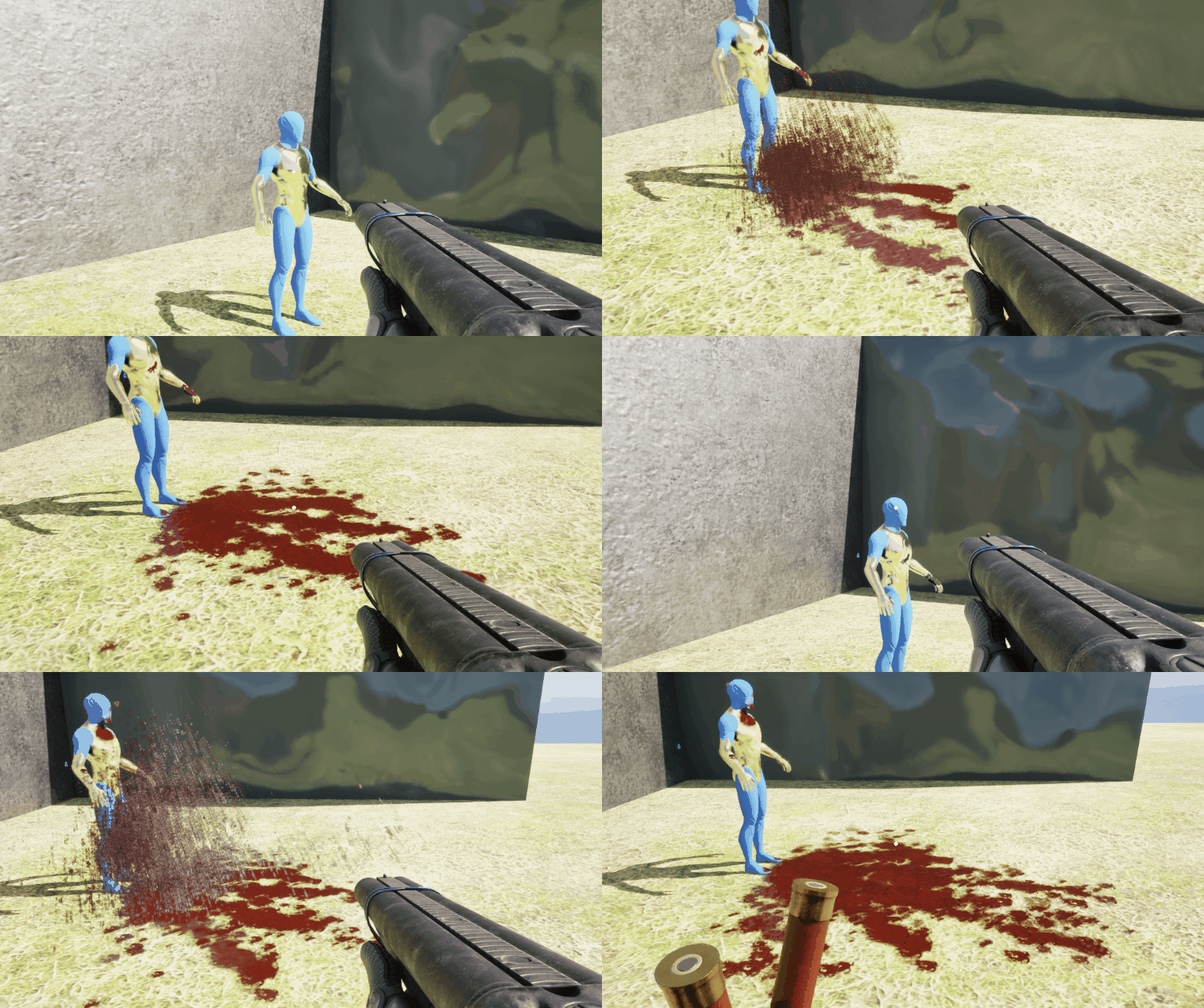
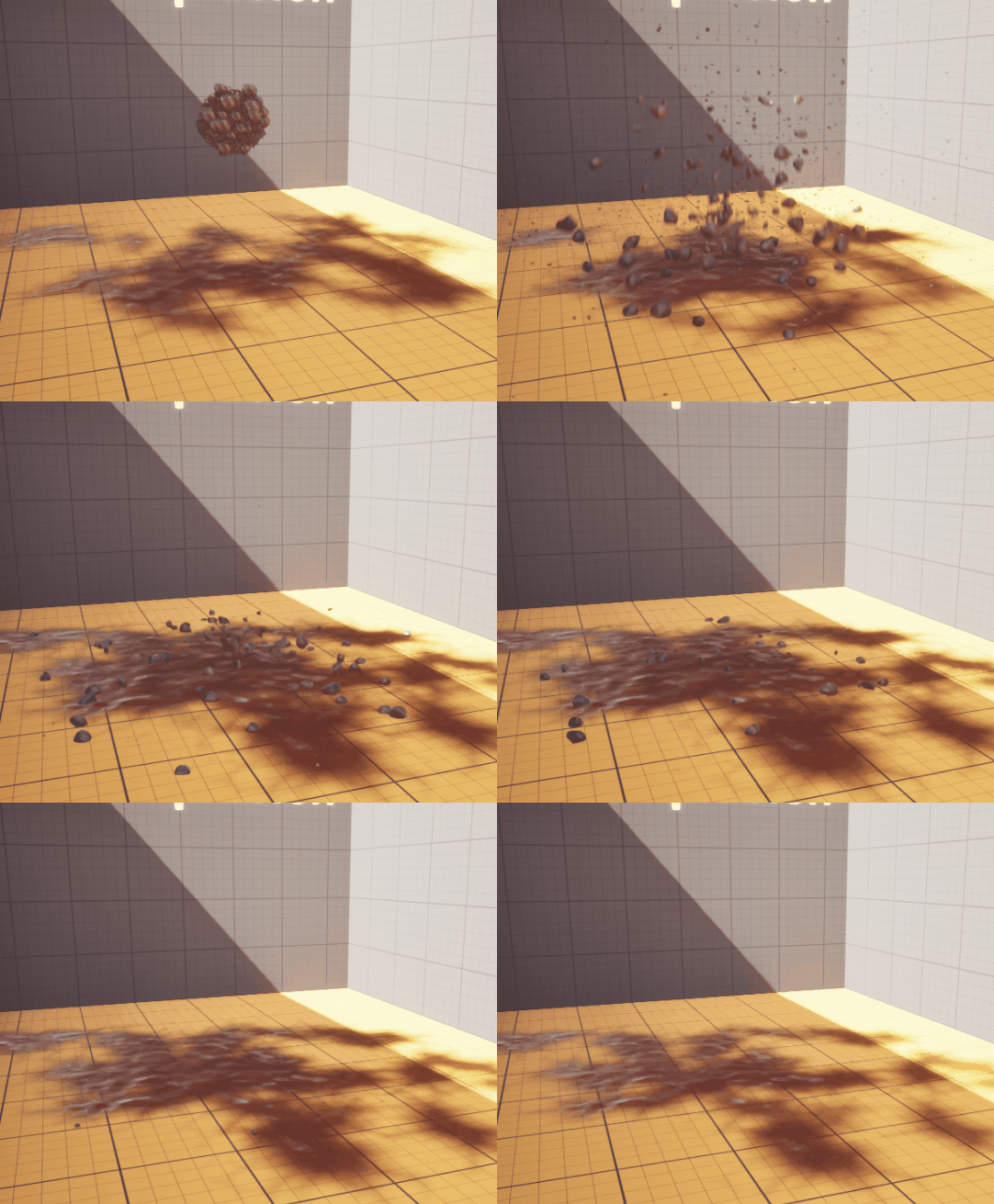
Building Gore FX
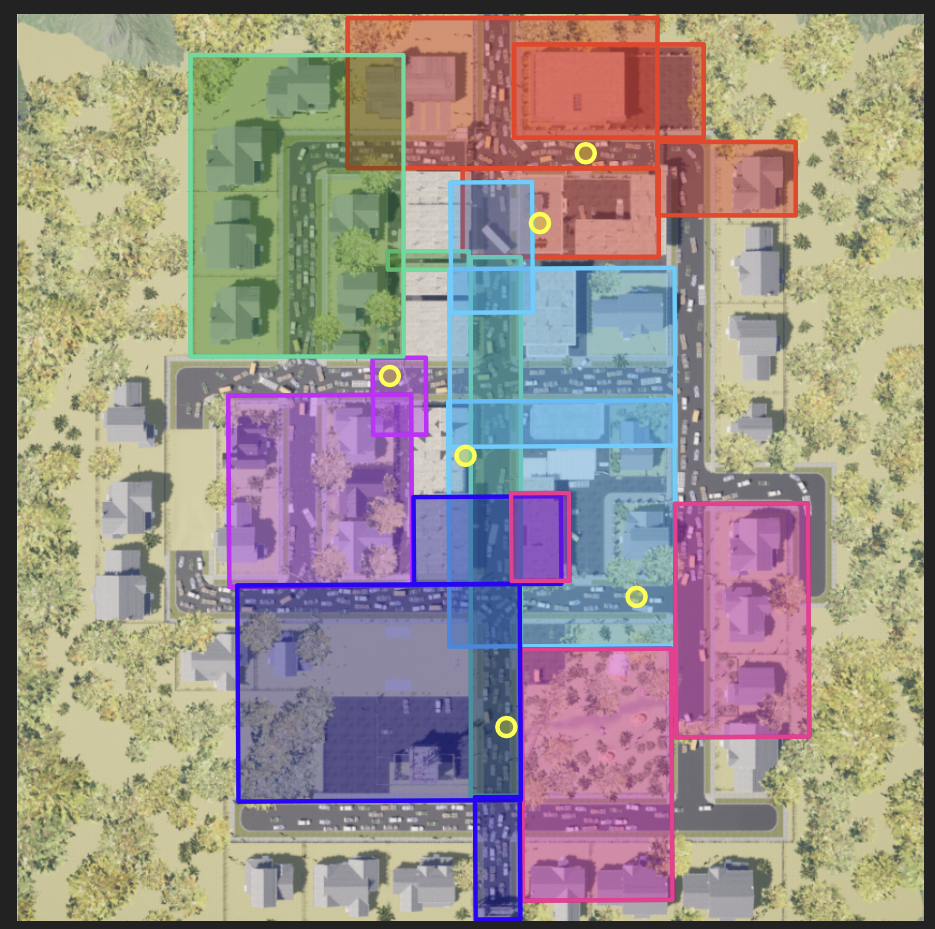
Sublevel “load zone” plan
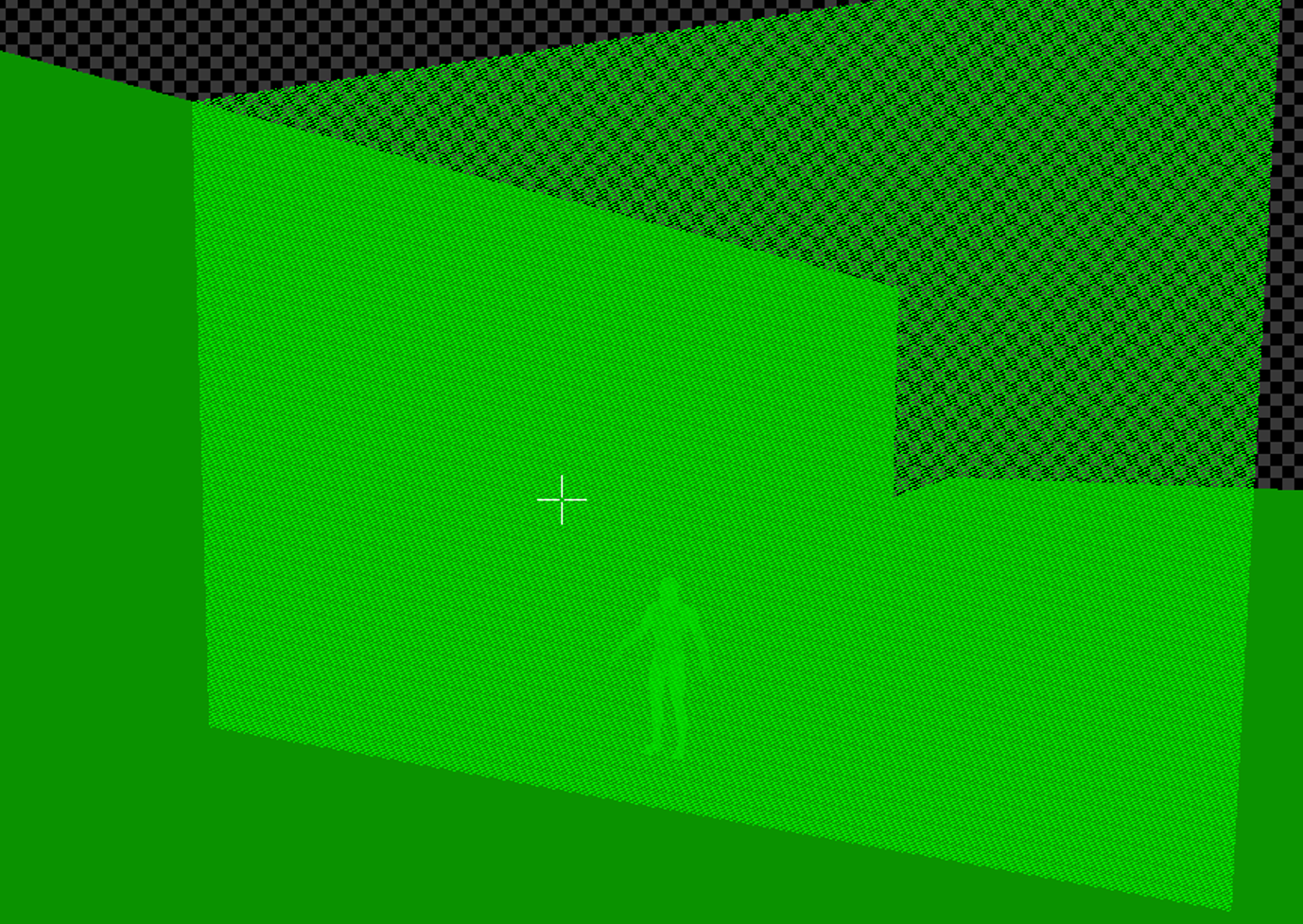
dithered glass material (shader complexity view)
Conclusion / Post Mortem
I’m really proud of the range of pipelines and tools I was able to explore throughout this project. I was able to gain more experience across multiple areas of development, pour lots of time into player feedback systems and I was especially happy with the game’s final performance. Actively pushing for performance improvements throughout development helped me build a deeper understanding of how to analyze, optimize, and improve any game using various practical techniques.
During early development, the project went through several shifts in design direction, moving from a slower, more horror-focused experience toward a faster-paced action FPS with strong horror themes.
While this process required iteration and re-evaluation, settling on a clear final vision allowed us to expand the scale of the level significantly and place a greater emphasis on the game’s lore, environmental storytelling, and world-building, resulting in a richer and more engaging experience for players.
Overall, this project was a strong learning experience that reinforced the importance of clear vision, technical optimization, and adaptability during development. The final result represents a solid, cohesive game experience and a meaningful step forward in my growth as a technical and game-focused developer.
Project Responsibilities
Throughout the project my responsibilities were in Technical Art but also as a generalist focusing on improving player feedback systems overall through various means.
Project aspects I worked on include:
Making all VFX assets including weapon VFX, enemy gore VFX, environmental falling leaves and fog FX and various surface hit FX.
Grenade explosion logic, mesh, texture, sound design and explosion VFX.
Directional Damage UI Indicator and texture
Contributed to findable lore notes
Contributed to level design areas
Created item highlight and low health post processing shaders.
All audio setup using Unreal Metasound for dynamic sound setups.
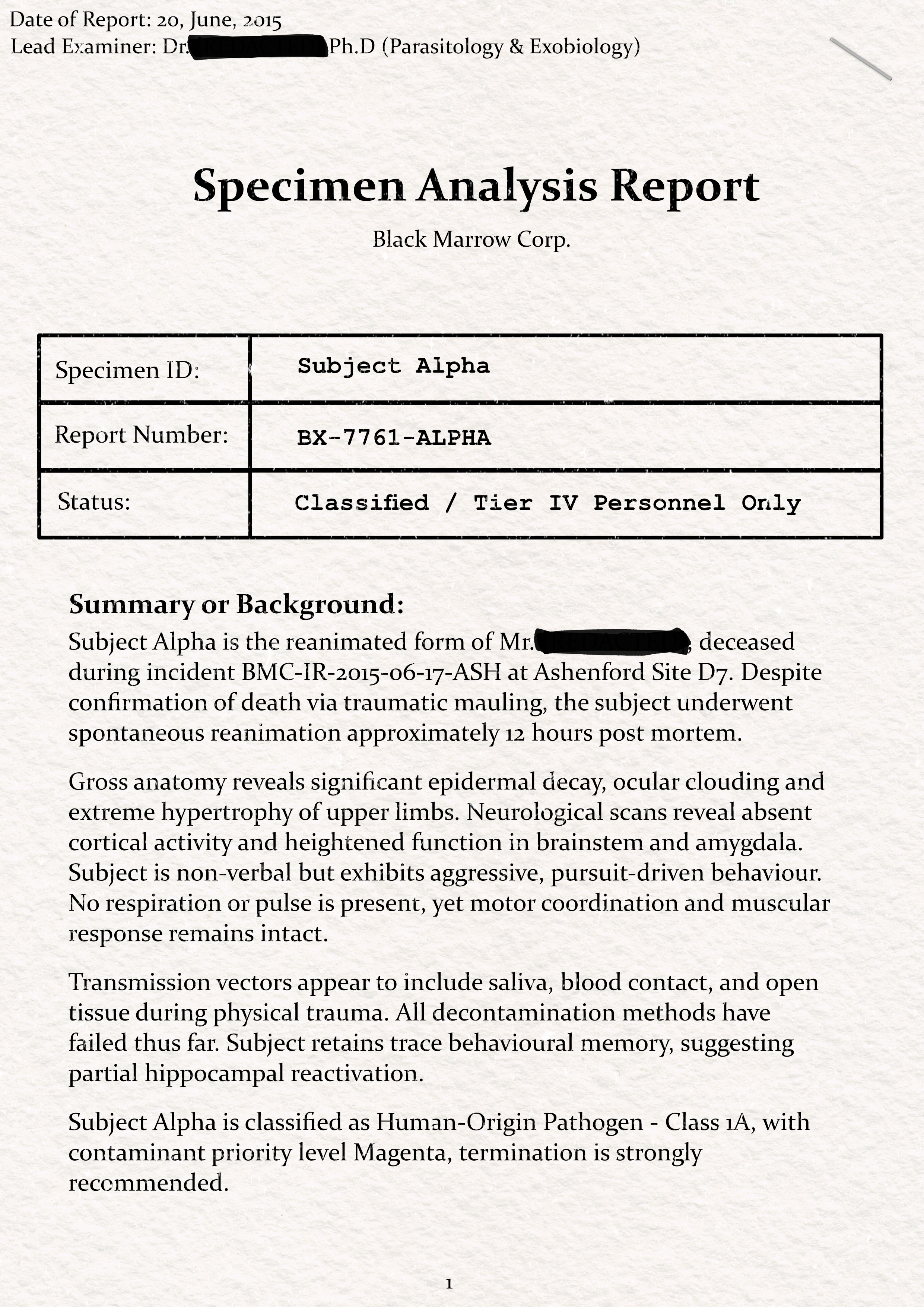
Scientific report lore note
Optimizing the Project
The work I’m the most proud of on this project is the optimization I was able to achieve.
I was able to bring the build from 20-25FPS on high to 90-110FPS on all machines I tested with. I was also able to bring it up from 10-15FPS to 60-90FPS on ultra.
I used the Unreal Insights tool extensively to locate performance bottlenecks and begin implementing fixes.
I optimized the game on both the asset level and game level and made various changes:
I built a new glass material with dithering, resulting in a “frosted” effect that removed all transparency from windows.
Grouped all building mesh pieces, fence pieces etc. into single meshes.
Instanced all identical meshes where possible.
Moved all interiors and exterior builds and props into dynamically loaded / unloaded sublevels based on player path.
Made a fog post process shader to be able to cull distance objects outside of fog range.
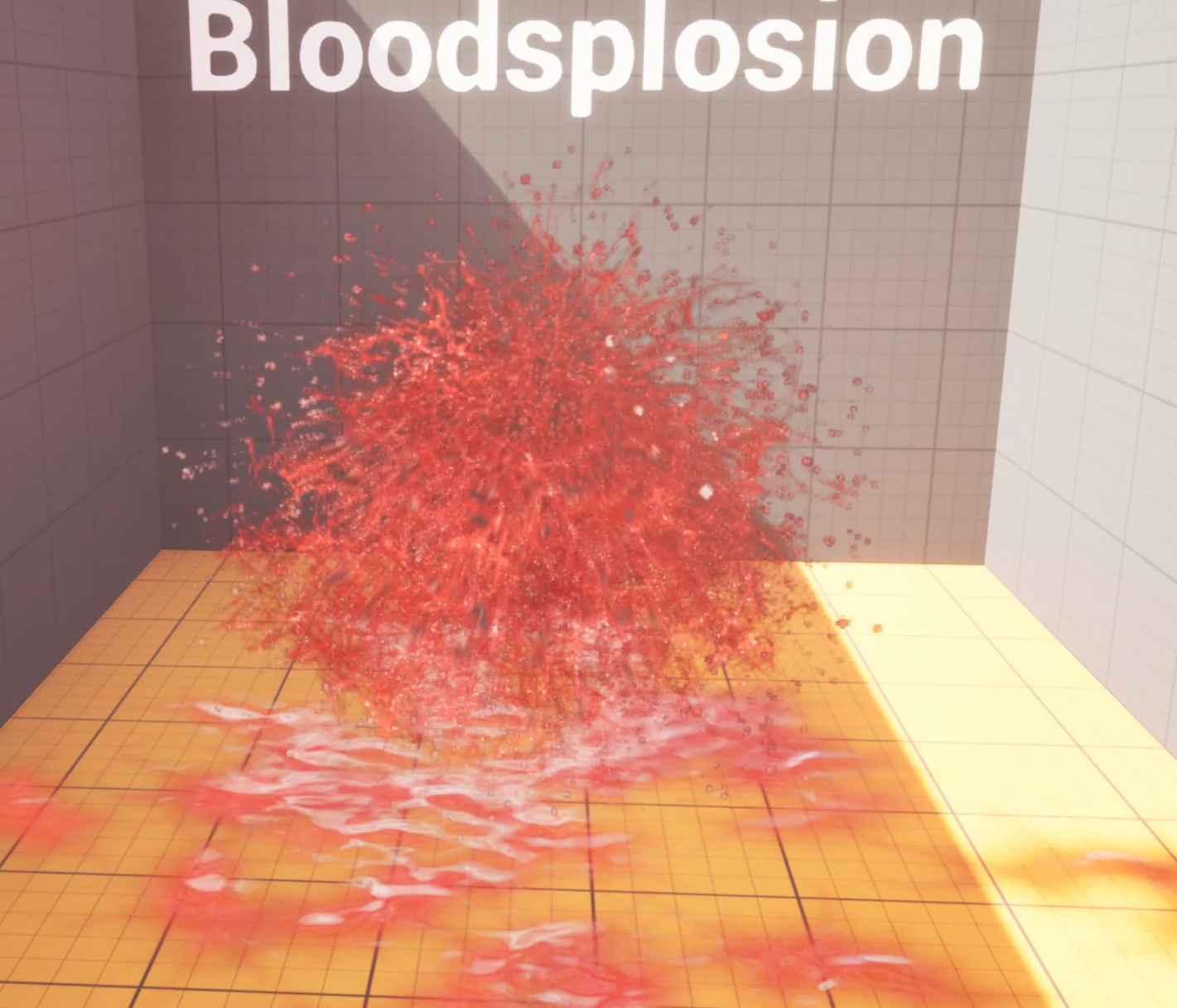
I build the VFX for the project using various tools. I used Niagra, Material Editor, Blueprints, Embergen, Liquigen, Blender and Substance Designer in different combinations to build each of the effects present in the game, including the gore FX.
I built the Blood Spray effect that emits from zombies when when and where they are shot
I built the “Bloodsplosion” effect that emits when players kill a zombie with a shotgun within and certain range if enough damage is done.
Both the Blood Spray and Bloodsplosion have components made using Liquigen simulated flipbooks.
The Blood Spray makes use of Niagara custom data where droplets land which then spawns blood drop decals at the location to leave a realistic surface stain for each drop.
Other than Liquigen for the flipbooks I also build the blood droplet textures in Substance Designer and made the gore chunks in Blender.